
Why San Diego Homeowners Are Looking Below for Extra Income
San Diego's housing market is one of the most competitive in California, and that pressure isn't going away anytime soon. With median home prices well above the national average and rental demand climbing steadily, homeowners across the city are getting creative about generating extra income — and many are realizing the answer is right beneath their feet.
Converting an unused or underutilized basement into a legal rental unit is one of the smartest investments a San Diego homeowner can make. Whether you're in La Mesa, El Cajon, or Chula Vista, a well-planned basement conversion can bring in consistent monthly income while significantly boosting your property value. But there's a lot to consider before you start swinging a hammer.
Understanding ADU Rules in San Diego
California has been at the forefront of Accessory Dwelling Unit (ADU) legislation, and San Diego has embraced these changes. The city has streamlined its permitting process to encourage homeowners to add legal living spaces to their properties, including basement conversions.
Here are the key things to know:
- Permits are required. Any basement conversion intended for habitation must go through the city's permitting process. This ensures the space meets building codes for safety, ventilation, egress, and structural integrity.
- Zoning matters. Most residential zones in San Diego allow ADUs, but it's important to verify that your specific property qualifies. Setback requirements and lot coverage limits may apply.
- Separate entrance is typically needed. A legal rental unit generally requires its own entrance, which is something to plan for early in the design phase.
- Parking requirements have been relaxed. Recent state legislation has reduced or eliminated parking mandates for ADUs near transit, which applies to many neighborhoods in San Diego.
Working with a remodeling contractor who understands local building codes can save you months of headaches. At Riverside Basement Pros, we help homeowners navigate the permitting process from the very beginning so there are no surprises down the road.
Essential Features Every Basement Rental Unit Needs
A basement rental unit isn't just a finished basement with a bed in it. To attract quality tenants and comply with local codes, you'll need to include several key features.
A Full Bathroom
Every rental unit needs its own bathroom. This typically means adding plumbing for a shower or tub, toilet, and sink. Basement bathroom renovations require careful planning around existing plumbing lines and drainage, but an experienced contractor can make it work efficiently.
A Kitchenette or Full Kitchen
Tenants need a place to prepare meals. Depending on the size of your basement, this could range from a compact kitchenette with a sink, mini-fridge, and cooktop to a full kitchen with standard appliances. Kitchen remodeling in a basement requires proper ventilation and electrical work, so don't cut corners here.
Proper Egress
Building codes require that basement living spaces have adequate emergency exits. This usually means egress windows or a direct exterior door. If your basement currently has small, non-compliant windows, they'll need to be enlarged or replaced.
Adequate Ceiling Height
San Diego building codes require a minimum ceiling height for habitable spaces, typically around seven feet. If your basement falls short, there are solutions — including underpinning or lowering the floor slab — though these add to the project scope and cost.
Waterproofing
No tenant wants to live in a damp space, and moisture is the number one enemy of basement living areas. Before any finishing work begins, your basement should be thoroughly waterproofed. This includes addressing any foundation cracks, installing proper drainage systems, and applying moisture barriers to walls and floors. Skipping this step is a recipe for mold, structural damage, and unhappy tenants.
How Much Does a Basement Rental Conversion Cost in San Diego?
The cost of converting a basement into a rental unit varies widely depending on the size of the space, the condition of the existing basement, and the finishes you choose. In the San Diego area, homeowners can generally expect to invest somewhere between $50,000 and $150,000 for a full conversion that includes a bathroom, kitchenette, flooring, and all necessary code upgrades.
That might sound like a significant investment, and it is. But consider the return. A well-appointed one-bedroom basement unit in neighborhoods like National City, Coronado, or central San Diego can easily rent for $1,500 to $2,500 per month or more, depending on the finishes and location. At those rates, many homeowners recoup their investment within a few years.
Design Tips to Maximize a Basement Rental Space
Basements come with unique design challenges, but they also offer opportunities to create a genuinely appealing living space. Here are some tips we share with our clients:
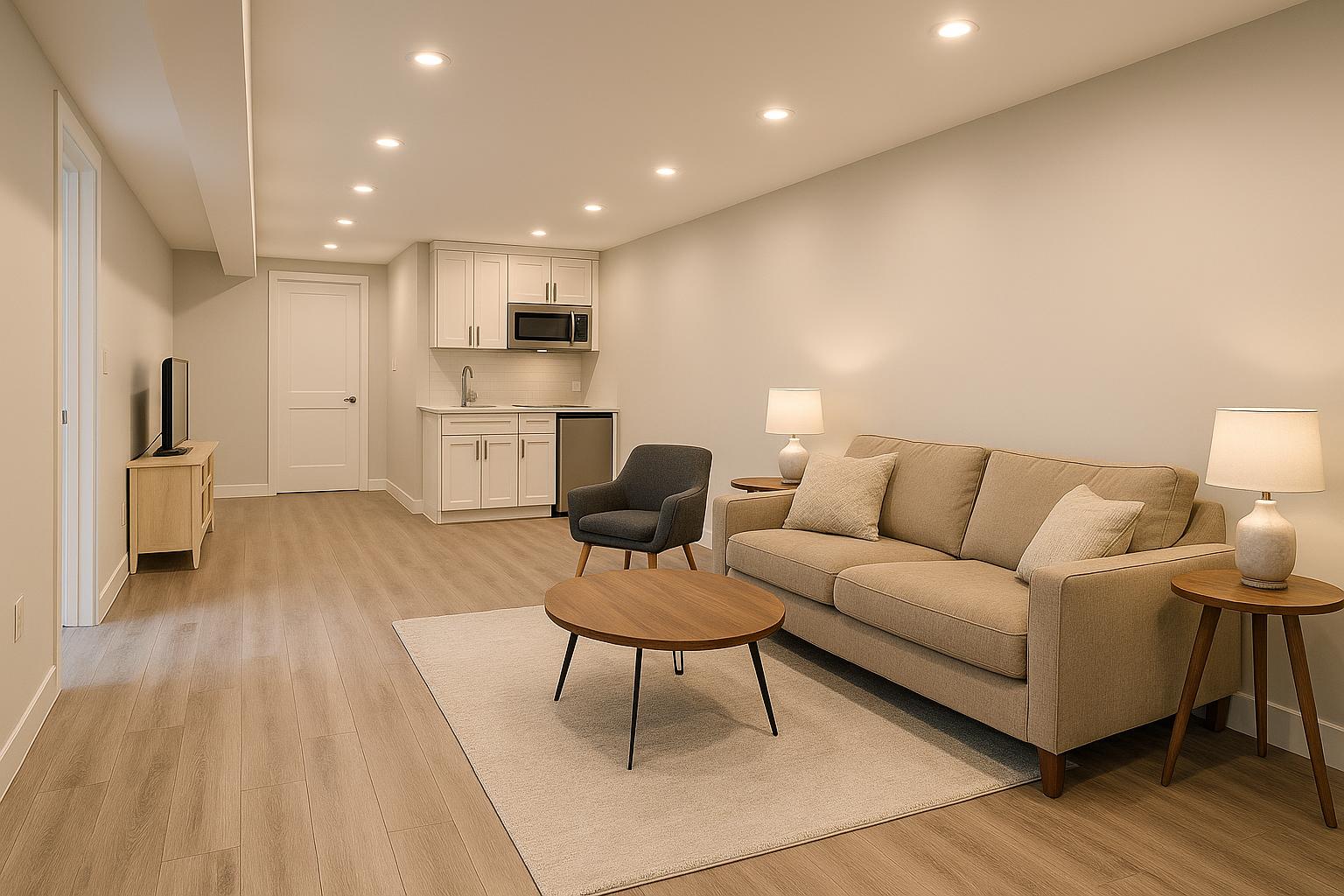
- Use light colors and recessed lighting. Basements tend to have less natural light, so bright wall colors and layered lighting make the space feel open and inviting.
- Choose durable, moisture-resistant flooring. Luxury vinyl plank and tile are excellent choices for basement floors. They look great, handle moisture well, and are easy to maintain — perfect for a rental setting.
- Create an open floor plan. Avoid breaking the space into too many small rooms. An open layout makes the unit feel larger and more functional.
- Invest in soundproofing. Since your tenants will be living directly below you, adding insulation and soundproofing materials between the basement ceiling and the main floor is well worth the investment for everyone's comfort.
- Don't forget storage. Built-in closets or a small storage area will make your unit far more attractive to potential renters.
Choosing the Right Contractor for Your Basement Conversion
A project like this touches nearly every trade — framing, plumbing, electrical, HVAC, waterproofing, flooring, and finish work. That's why it's critical to work with a remodeling company that has experience managing complex residential projects from start to finish.
When evaluating contractors in the San Diego area, look for:
- Proper licensing and insurance. California requires contractors to hold a valid license for the work they perform.
- Experience with basement projects. Not every remodeler has worked extensively below grade. Basement projects have unique requirements around moisture management, egress, and structural considerations.
- Transparent pricing and timelines. A reputable contractor will provide a detailed estimate and realistic project schedule before work begins.
- Strong local references. Ask for examples of completed projects in San Diego and surrounding communities.
At Riverside Basement Pros, basement transformations are our specialty. We've helped homeowners across San Diego, El Cajon, La Mesa, and beyond turn neglected basements into beautiful, code-compliant living spaces that generate real value.
Is a Basement Rental Conversion Right for You?
If you have an unused basement and you're looking for a way to offset your mortgage, build long-term equity, or simply make the most of your property, a rental conversion is one of the best moves you can make as a San Diego homeowner. The demand is there, the regulations are more favorable than ever, and the right remodeling partner can make the process smooth and stress-free.
Ready to explore what's possible with your basement? Reach out to our team for a free consultation. We'll assess your space, walk you through the options, and help you create a plan that fits your goals and your budget.